
Collaborations in Projects
Building resilient rural communities through synergy of traditional knowledge and technological innovation
Programme: Cost Action
Cost Action Code: CA24170
Role of the Centre: Researcher Mónica Alcindor participates in Working Group 1, “Traditional Knowledge Systems and Rural Resilience”
Link: https://www.cost.eu/actions/CA24170/
Description: Rural communities across Europe face unprecedented challenges in the 21st century, including depopulation, economic stagnation, climate change impacts, and digital divides. These challenges undermine the resilience and sustainability of rural areas, which are essential for Europe’s cultural heritage, food security, and ecological health. The SMART-RURAL Action addresses these critical issues by proposing an innovative, integrated approach that combines traditional knowledge systems with modern technological solutions to enhance rural resilience and promote sustainable development.
This Action seeks to establish a pan-European network of researchers, practitioners, policymakers, and rural community representatives to co-develop and implement strategies that build rural resilience through the synergy of traditional wisdom and digital innovation. SMART-RURAL will work across four key areas: traditional knowledge systems and rural resilience, technological innovation for rural development, integrated resilience assessment and monitoring, and knowledge dissemination and capacity building. It places special emphasis on inclusiveness, youth engagement, and context-sensitive adaptation.
The Action will identify best practices, assess existing gaps, and develop a holistic framework for evaluating and strengthening resilience in rural communities. Through participatory research and real-world pilot projects, SMART-RURAL will co-create and test solutions tailored to specific rural contexts. It will also foster cross-border learning and interdisciplinary collaboration to translate findings into policy, practice, and education.
By empowering rural communities and bridging historical practices with emerging innovations, SMART-RURAL contributes to the European Green Deal, Smart Villages, and broader COST priorities – enhancing Europe’s capacity to respond to scientific, technological, and societal challenges in a cohesive and inclusive manner.
Weave Up+
Programme: Creative Europe – Culture, “Cooperation Projects” CREA‑CULT‑2025‑COOP), Project 101256051 – WUPlus
Role of the Centre: Support to the coordinator of the Portuguese partner, Susana Milão (Ideias Emergentes), in the development of research and multidisciplinary workshops (art, architecture and design) dedicated to textile material research, following production chains from raw material to final product, with a strong focus on innovation and experimentation.
Duration: 2025 – 2028
Link: http://www.weaveup.eu/
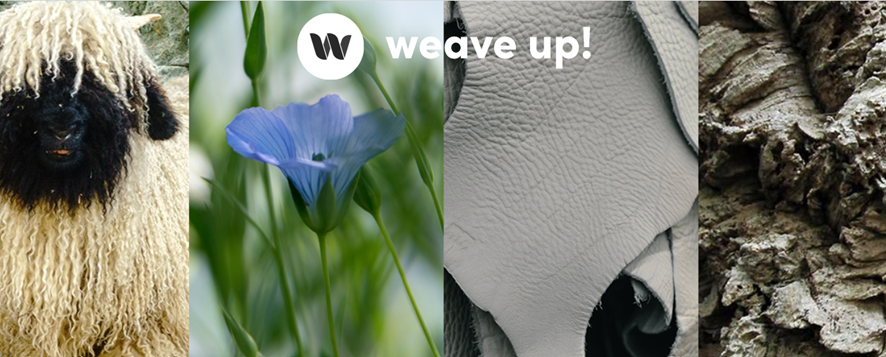
Description: Second edition of the project within the Creative Europe programme (medium scale), in partnership with France, Italy, Ukraine and Germany; while the first edition investigated cork, BioSskin, wool and linen, this new phase focuses on recycling and natural fibres. Through multidisciplinary workshops, Weave Up (WUPlus) deepens the research on materials and their production chains, from resource to final product, exploring innovative and sustainable solutions. CIAUD UPT’s involvement strengthens the dimension of applied research, design practice and its connection with the productive fabric.
Andam também os mortos: Paisagens Ciberliterárias sobre Memórias, de Raul Brandão.
Project Title: Andam também os mortos: Paisagens Ciberliterárias sobre Memórias, de Raul Brandão.
Programme: DGARTES
Role of the Centre: The researcher Clara Roberti provides support to the participating artist and researcher, promoting the project’s public activities to the interested scientific community.
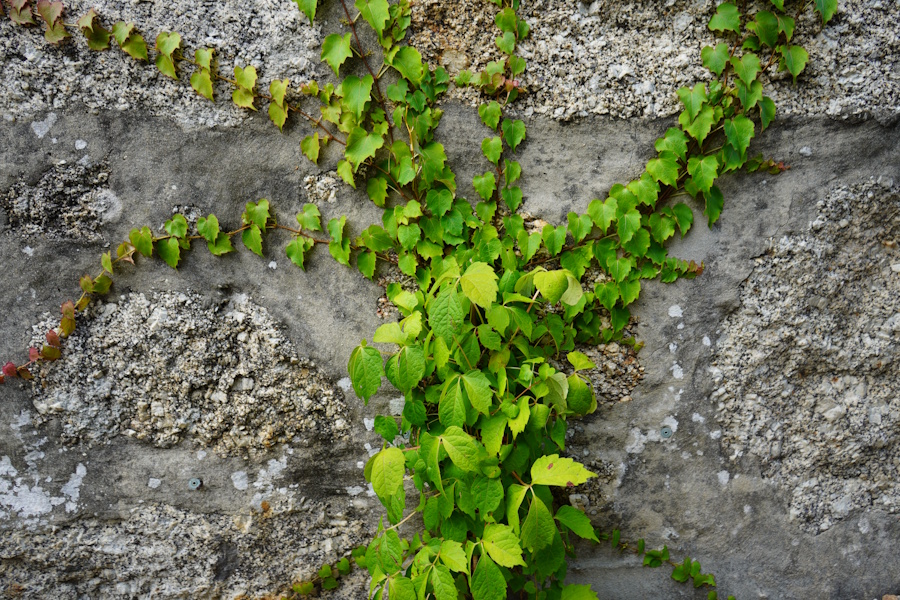
Abstract: On the occasion of the centenary of the publication of volume II of Memórias (1925-2025), by Raul Brandão, d1g1t0 indivíduo_coletivo is proposing that the dead also walk: a cyber-literary installation that invites an interactive re-reading and retextualisation of the literary landscapes proposed by Raul Brandão based on the geographical region that hosted him between 1912 and 1930 – the parish of Nespereira, in the municipality of Guimarães. With the main aim of providing an experience of the stratifications between individual memory and collective memory that the passage of time imposes on a territory and a community, the project invites an expanded understanding of rereading, in a game between tradition and innovation that, in time, transmutes and renews itself.
Description for supporting research centres in Portugal
MobileWorlds
Project Title: MobileWorlds: empowering third cultures for sustainable and inclusive mobility.
Programme: Marie Sklodowska-Curie Action Post-Doctoral Fellowship, based at HVL (Bergen, Norway)
Role of the Centre:The researcher Clara Roberti provides support to the photographer and researcher contributing to the photographic exhibition at the MobileWorlds Festival, and supports the dissemination of the festival.
Period: 2023-2026
Abstract:
Mobile Worlds is a research, networking, and action project, seeking to understand how various cultural backgrounds help shape how people think, and how ‘we’ might ‘change our minds’ – starting with how ‘we’ think about sustainable mobility. It includes fieldwork in Porto, Portugal, and Bergen, Norway. More information about the project as a whole can be found on: https://mobileworlds.online/ The project is coordinated and executed by Kim Carlotta von Schönfeld, in close collaboration with Wendy Tan, both based at the Western Norway University of Applied Sciences. The EU website of the project can be found here.
As part of this project, a Festival is being organized. The MobileWorlds Festival is about stepping outside the box, challenging old ideas, and imagining new ways of moving, connecting, and living together. It draws inspiration from third cultures—the rich, layered experiences of people shaped by migration, travel, and globalization. Through a mix of art, discussion, and creative workshops, MobileWorlds invites participants to reflect, share, and rethink how mobility is intertwined with identity, relationships, and the world around us.
The Festival will take place on the following dates and locations:
Bergen, Norway – September 26+27 –Litteraturhuset
Global – October 10+11 – Online
Porto, Portugal – October 24+25 –Maus Hábitos
+ Unbox the Festival – 4 and 18 October and 1 November
The Festival includes a photographic exhibition, interviews with planners and artists, individual and family workshops, and more. All other information and registration can be done via:
https://mobileworlds.online/pt/the-festival/
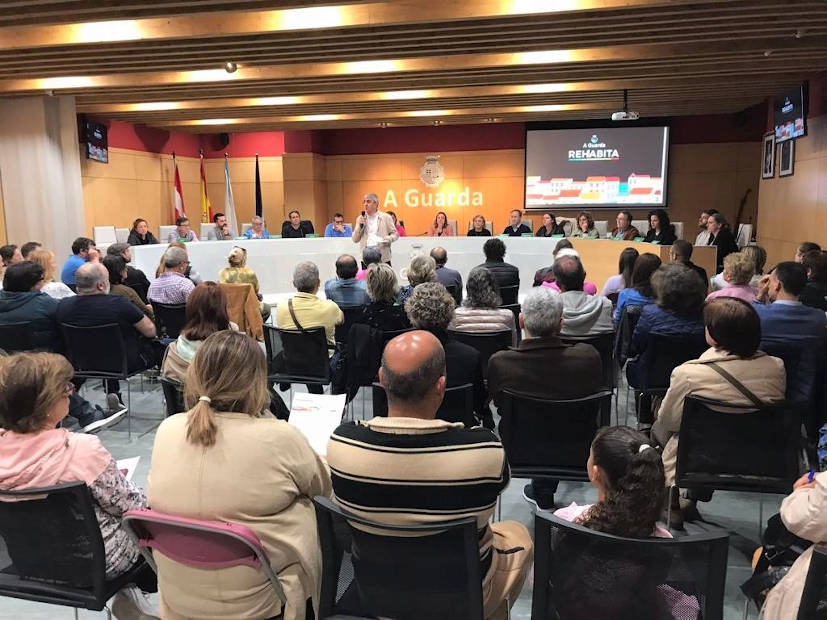
Session Hall of the Concello de A Guarda, explanatory session of the Rehabita Plan for the population of A Guarda.
Rehabita Plan
Project Title: Rehabita Plan
Programme: Residential Rehabilitation Program of the Recovery, Transformation, and Resilience Plan (PRTR). NextGenerationEU funds
Role of the Centre:The researcher Ana Lima collaborates in the team of specialists responsible for managing and advising on the plan.
Period: 2023 – 2026
Abstract:
This program, promoted by the Concello de A Guarda, Pontevedra (Galicia), aims to mitigate the housing shortage, improve the energy efficiency of buildings, and enhance urban aesthetics, aligning with the PACES (Action Plan for Climate and Sustainable Energy).
The program includes a set of financial support measures, tax benefits, and technical assistance for the rehabilitation of properties in A Guarda:
- Direct grants for structural works, façade rehabilitation, interior modernization, and energy efficiency improvements.
- Reduction or exemption from municipal taxes, such as IMI (Municipal Property Tax) and IMT (Municipal Tax on Property Transfers), as well as exemption from administrative fees related to construction and rehabilitation permits.
- Free technical support, ensuring that projects comply with regulatory and heritage requirements.
- Easier access to financing, through partnerships with banking institutions offering favorable conditions for renovation work.
The program is intended for property owners in A Guarda, including both individuals and businesses, provided that their rehabilitation projects meet the established requirements. The Rehabita Plan seeks to drive the recovery and modernization of the real estate stock, promoting its availability for rental, sale, or upgrading, always under sustainability and energy efficiency criteria.
Archethics
Project Title: ARCHETHICS. Dissonant European heritage as labs of democracy.
Programme: URBACT
Role of the Centre: The researcher Mónica Alcindor collaborates in the Vila Nova de Cerveira Local Action Group.
Period: 01/06/2023 – 31/12/2025
Abstract:
The ARCHETHICS network brings together nine European cities that share the presence of heritage linked to a complex and controversial historical past (totalitarian regimes, disputed borders, etc.). Architecture, People, History and Ethics will be the four dimensions of the project to activate urban community laboratories with a view to transforming this heritage, made up of previously abandoned spaces, into places for locals and visitors to share knowledge and come to a multi-perspective understanding of the past and new visions for the future.

Project Title: EU Urban Regeneration to achieve the Green Deal Objectives.
Programme: Jean Monnet RegenEU
Role of CIAUD-UPT: The researcher Mónica Alcindor participates as a member of the project team.
Period: 2024-2027
Abstract:
EU urban regeneration is an essential policy for achieving the multidimensional transition demanded by the European Green Deal (EGD), without leaving anyone behind. However, its relevance collides with insufficient knowledge of its potential among relevant stakeholders and EU citizens. In addition, there is a shortage of bachelor’s and master’s degree courses on this topic, and there is also little interrelated discussion between academia and policymakers.
In this context, the Jean Monnet RegenEU Chair focuses on promoting studies, research and awareness-raising on the transformative potential of urban regeneration by:
Emphasising the relevance of urban regeneration for resilient cities and a prosperous EU, targeting a wide range of urban stakeholders and looking ‘beyond sustainability’ in a time of ‘polycrisis’.
Stimulate discussion on how EU regeneration policy should evolve to achieve the ambitious social and environmental objectives of the EGD and tackle pressing urban challenges from a people-centred approach.
Inform debates and decision-making on Cohesion Policy in order to strengthen the EU’s leading role in realising a resilient and cohesive urban system, as outlined in the UN 2030 Agenda for Sustainable Development, the Urban Agenda for the European Union and the EGD.
Promoting EU values and, in particular, defending a European urban system that prioritises the ‘common good’ (as set out in the New Leipzig Charter).