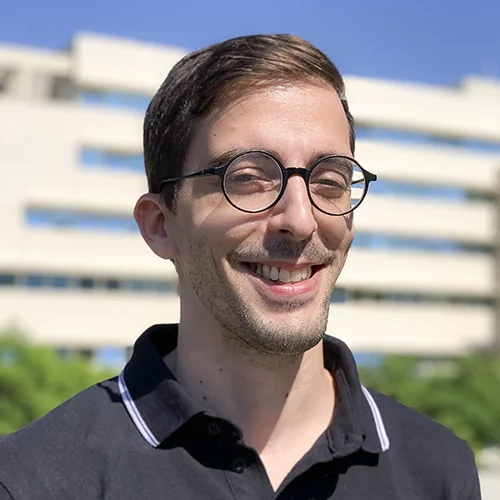
PhD in Urbanism from the Faculty of Architecture of the University of Lisbon, with the thesis entitled “The persistence of urban form. Interpreting the pre-existences in the construction of the Portuguese city” (2023), with the support of the doctoral scholarship program of the Foundation for Science and Technology (FCT). Graduated in Urban Management Architecture from the Faculty of Architecture of the Technical University of Lisbon, he was an ERASMUS scholarship holder at the Faculty of Architecture ‘La Sapienza’, in Rome, Italy. He also participated in the Ausmip+ program, having been a research fellow at the ‘Kyushu University dept. of Urban Design, Planning. Graduate School of Human-Environmental Studies’ in Fukuoka, Japan. Research member of the research laboratory FormaUrbis Lab since 2012, collaborated in research projects funded by the Foundation for Science and Technology (FCT) PTDC/AUR-URB/100929/2008 “The Built Fabric in the Portuguese City – Morphological Inventory” and PTDC/ ART-DAQ/30110/2017 “Built Typology – Morphological Inventory of the Portuguese City”. As a member of FormaUrbis Lab, he was part of the executive committee of the conference series “Conversas sobre a Forma da Cidade” with several international researchers, as well as of the editorial team of the book collection “Cadernos de Morfologia Urbana” published since 2014. Since 2022, he has been an Assistant Professor at the Department of Architecture and Multimedia in Gallaecia. He regularly publishes texts of a scientific nature, participating as a speaker in several national and international seminars and conferences. Between 2016 and 2021, he participated with the Lisbon Archeology Center (CAL) in the “Project for the Study and Enhancement of the Roman Cryptoporticus of Lisbon (CRLx)”, having contributed to the identification of the structure as the foundation of an ancient Roman thermal building. As part of his individual research and his partnership with CRlx, he carried out several publications on how the morphology of the contemporary urban fabric reflects the long history of the city of lisbon, among which the identification of the city’s Roman amphitheater stands out (in the magazine Rossio 4) , as well as the analysis of the urban structure of the Roman city (in the publication Lisboa Romana (III Volume): A Morfologia Urbana). Keywords: Urban Form, Typo-Morphology, Persistence, Sedimentation, Architectural History, Pre-existences.