Month: July 2026

Resonant Territories Under Discussion at the KISMIF Conference

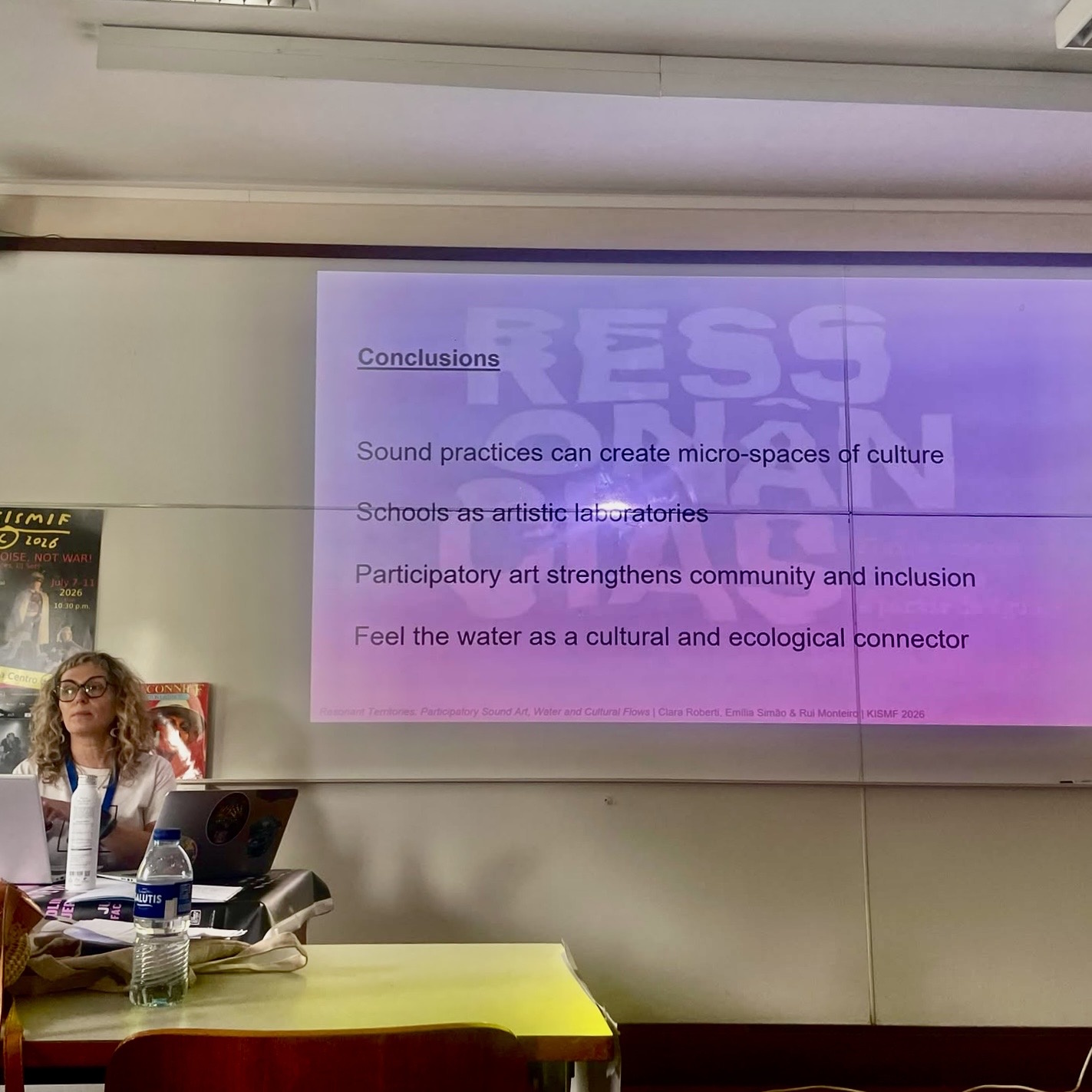
Resonant Territories Under Discussion at the KISMIF Conference CIAUD-UPT researchers Clara Roberti and Emília Simão participated in the international conference KISMIF – DIY Cultures, Crisis and Critical Imagination, held in Porto, Portugal, where they presented the paper “Resonant Territories: Participatory Sound Art, Water and Cultural Flows.” The presentation introduced the project Ressonâncias: Sound and Cultural Flows from Water, developed in Esposende, and explored the potential of participatory sound art to raise environmental awareness and promote social inclusion. Through soundwalks, field recordings, and creative workshops involving migrant and non-migrant young people, the project demonstrates how these practices can generate new narratives about the territory and create emerging cultural platforms that foster sustainability, artistic participation, and intercultural dialogue.
Basqueiral: Culture, Education, and Resistance at the KISMIF Conference

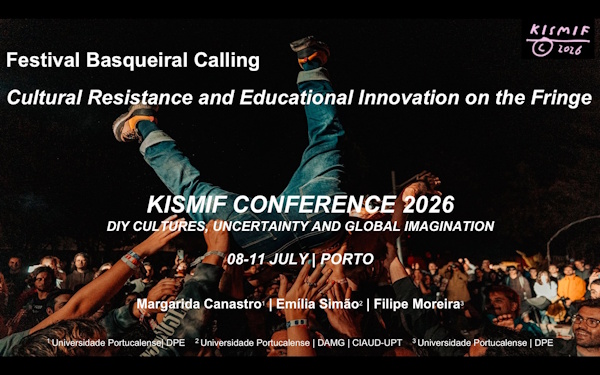
Basqueiral: Culture, Education, and Resistance at the KISMIF Conference CIAUD-UPT researcher Emília Simão, together with colleagues from DPE-UPT, participated in the international conference KISMIF – DIY Cultures, Crisis and Critical Imagination, held in Porto, Portugal, where they presented the paper “Festival Basqueiral Calling: Cultural Resistance and Educational Innovation on the Fringe.” The presentation focused on a study of the Basqueiral Festival and the Basqueirart project, highlighting their role as spaces for informal learning, cultural participation, and creative resistance. The research demonstrates how the interaction between music, contemporary art, and community within independent festivals can serve as a platform for informal education.

Augmented reality takes center stage at CNaPPEs 2026

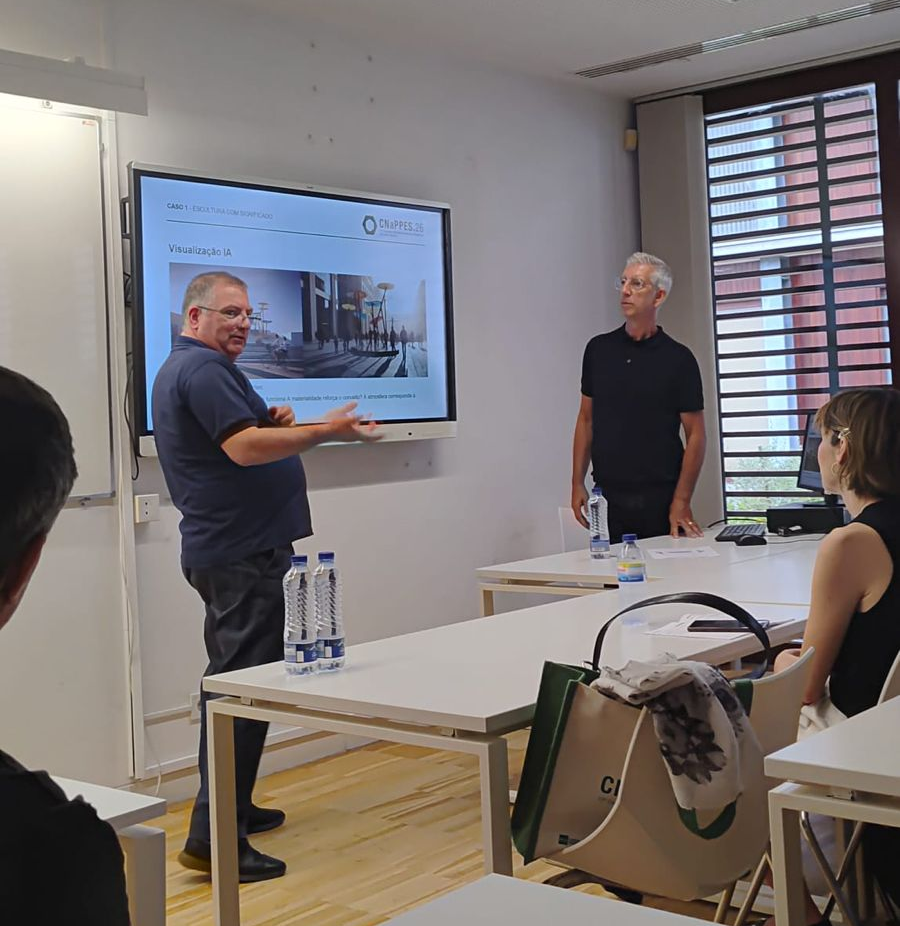
Augmented reality takes center stage at CNaPPEs 2026 David Lopes presented the paper entitled “Augmented Reality as an Exhibition Tool in Non-Adapted Academic Spaces: The Case of the Multimedia and Arts Curricula at Universidade Portucalense” at the 12th National Congress on Pedagogical Practices in Higher Education (CNaPPEs 2026). Authored by David Lopes, Alexandre Clément, Emília Simão, and Ivo Teixeira, the study analyses the potential of augmented reality as an exhibition solution for academic spaces that were not originally designed for this purpose, focusing on the Multimedia and Arts programmes at Universidade Portucalense.

Digital sensory mediation and extreme habitats take center stage at ICONS 2026

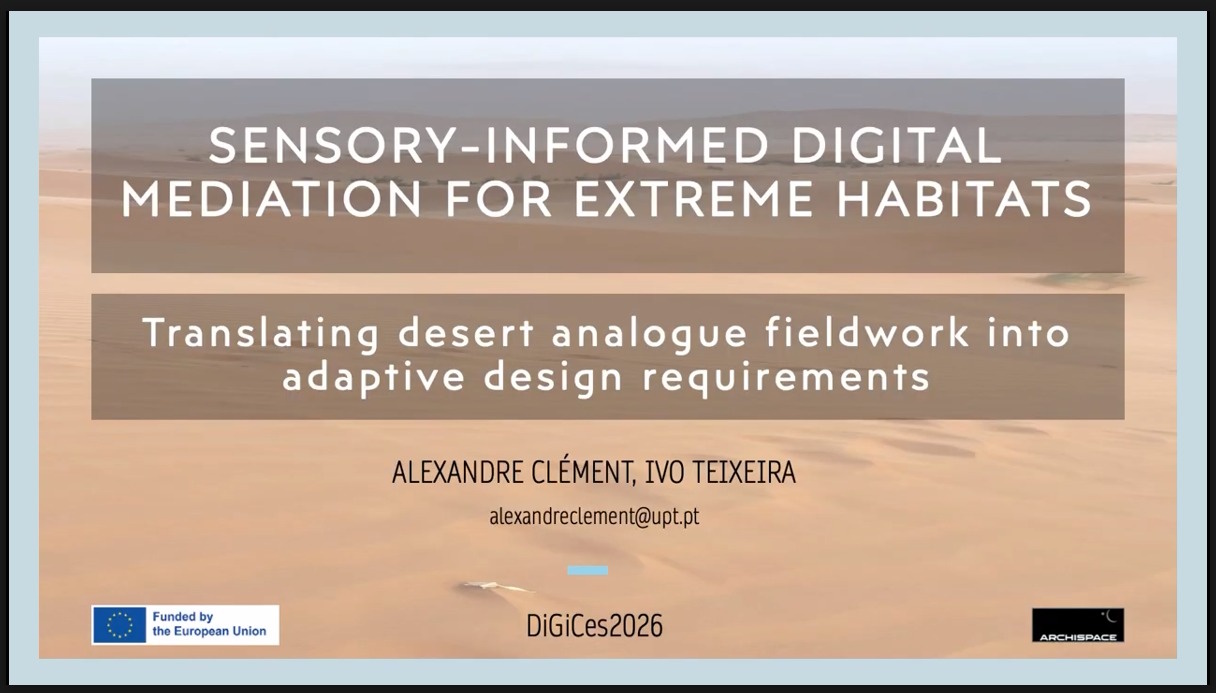
Digital sensory mediation and extreme habitats take center stage at ICONS 2026 At ICONS 2026, Alexandre Clément presented a study conducted with Ivo Teixeira that explores how data collected through fieldwork in desert analogue environments within the ArchiSpace project can be translated into adaptive design requirements for extreme habitats. The research brings together digital mediation, sensory perception, architecture, and computation, contributing to current debates on future habitats, environmentally extreme contexts, and design strategies informed by human experience under extreme conditions.

Researchers present a hybrid approach to teaching architectural design at CNaPPES26

Researchers present a hybrid approach to teaching architectural design at CNaPPES26 Researchers Joaquim Flores, Luís Paulo Pacheco, and Isabel Clara Neves participated in CNaPPES26, the National Congress on Pedagogical Practices in Higher Education, held on 10 July 2026, where they presented the paper “From Analogue Methods to Artificial Intelligence: Validating Architectural Design through Hybrid Representation Processes.” The presentation discussed the results of a pedagogical experiment developed within architectural design education, centred on the sequential integration of analogue drawing, digital modelling, and artificial intelligence as part of a progressive and reflective learning process. In contrast to approaches that use artificial intelligence as a tool for the immediate generation of solutions, the study advocates its use at a later stage of the design process, treating it as an instrument for the critical validation of students’ design decisions. Participation in CNaPPES26 reinforces the researchers’ commitment to pedagogical innovation in architectural education and to the development of methodologies that combine analogue and digital practices, contributing to the critical and responsible use of artificial intelligence in higher education.

International conference RILEM ICEC2026

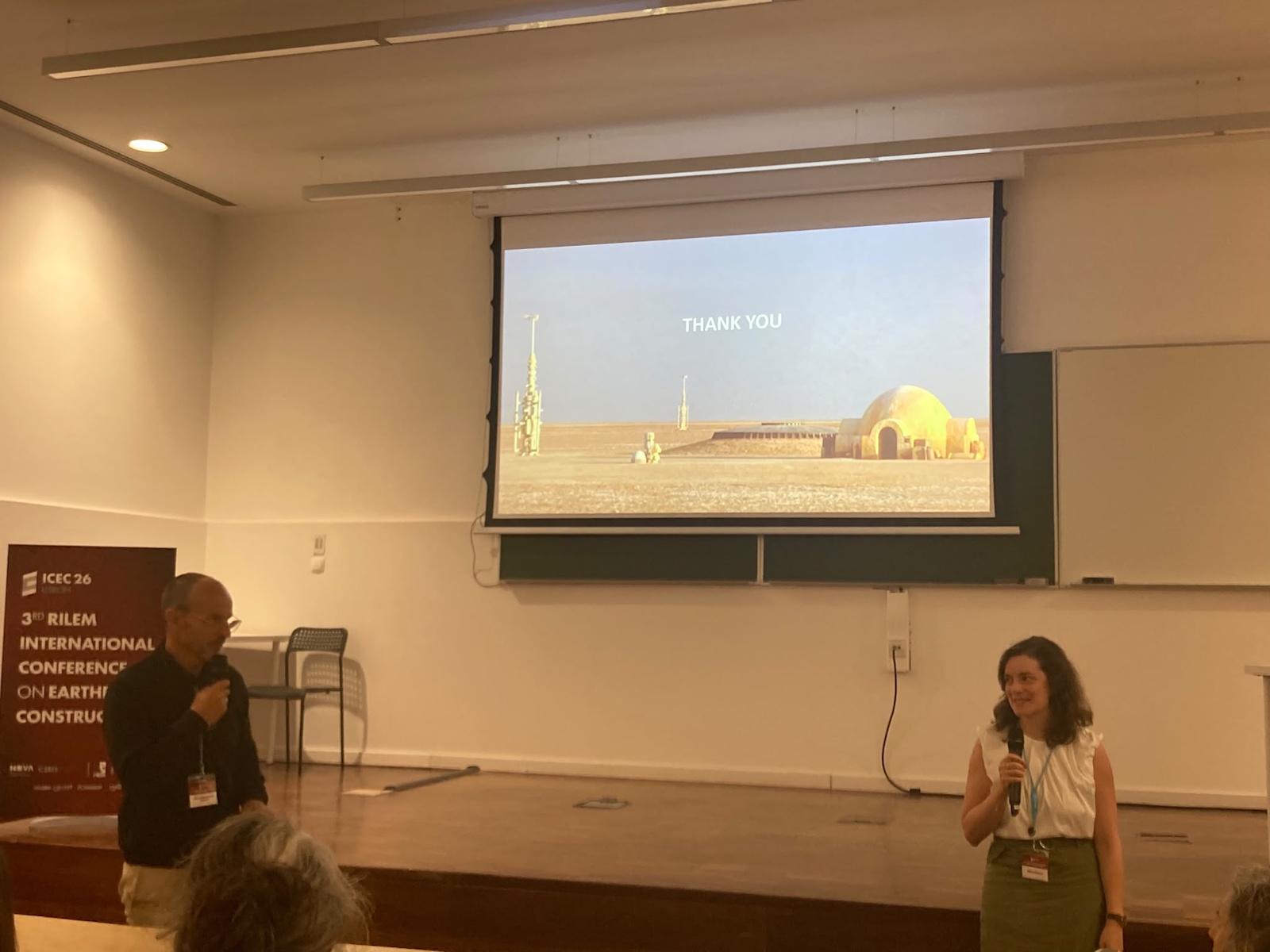
International conference RILEM ICEC2026 Two oral presentations were delivered at the international conference RILEM ICEC2026, the 3rd International Conference on Earthen Construction. Researchers Mariana Correia and Telma Ribeiro addressed earthen construction and its role in the contemporary challenges of architecture and sustainability. Participation in this conference strengthens the presence of research developed in the field of earthen architecture in international scientific forums, contributing to the discussion on local materials, low-impact construction solutions, and innovative strategies for extreme contexts and future habitats.

ArchiSpace International Seminar | UPT 16-17 July 2026

ArchiSpace International Seminar | UPT 16-17 July 2026 Portucalense University will host the ArchiSpace International Seminar | Architecture in Space on 16 and 17 July 2026. This international event will focus on space architecture and habitats for extreme environments. The programme will bring together national and international experts, including representatives from the Portuguese Space Agency, TU Delft, Hassell, Penn State University, UPC, UCAM, IRSPS, CIAUD and UPT. Over two days, the seminar will address topics such as the design and prototyping of extraterrestrial habitats, earthen architecture applied to space, psychological adaptation to extreme environments, artificial intelligence, robotics, digital and immersive experiences, and lessons learned from ancient settlements in extreme contexts.

Feeling at Home as a Dimension of Resilience in Architecture for Extreme Environments

Feeling at Home as a Dimension of Resilience in Architecture for Extreme Environments The oral communication “Feeling at Home as a Dimension of Resilience in Architecture for Extreme Environments”, presented by Mónica Alcindor at the EGU General Assembly 2026, was featured in the Media Highlights of the European Geosciences Union. Developed by a multidisciplinary team, the work explores the importance of “feeling at home” as a dimension of resilience in extreme habitats. The research highlights that architecture for extreme environments should not only address technical requirements for survival, but also support psychological wellbeing, identity, sensory comfort and social cohesion. LINK

Scroll to top